Key takeaways
- Compare five yoga blocks in cork and EVA foam, from extra firm single bricks to three-inch two-packs, with sizes and pack counts to check before buying.
- Top Pick: Manduka Cork Yoga Block
- Runner-up: Gaiam Cork Yoga Brick
- Also consider: Hugger Mugger Cork Yoga Block
A yoga block is a simple prop with a short list of jobs: it brings the floor closer to your hands in standing poses, fills the gap under a hand or hip in seated work, and gives you a stable surface to rest weight on during slower, supported positions. Because the job is simple, the buying decision comes down to a few physical details rather than long feature lists. Material, thickness, and whether the listing sells one block or a matched pair explain most of the difference between the options below.
This guide compares five blocks across the two main materials. Three are cork singles from Manduka, Gaiam and Hugger Mugger, each with its own dimensions and edge shaping. Two are EVA foam two-packs from Gaiam and Trideer, one in the standard four-inch thickness and one in a lower three-inch profile. Every specification below comes from that product’s listing title or listing content, and anything the listing does not state is marked as a detail to confirm on the listing.
As an Amazon Associate, we earn from qualifying purchases.
Quick Answer
The right block depends on material and height. Cork blocks like the Manduka, Gaiam and Hugger Mugger picks feel firmer and heavier, and each is sold singly. Foam two-packs from Gaiam and Trideer take less effort to carry and give you a matched pair in one purchase. Check the thickness first: four inches is the standard size, while three inches sits lower.
Manduka Cork Yoga Block

The Manduka cork block is the firmest-feeling option in this group. It is made from fine-grain cork, and the maker describes it as an extra firm block with comfortable edges, positioned as a lightweight block for travel despite cork being the denser material in this roundup. That combination suits practitioners who put real weight through a block in standing poses and want a surface that does not compress under a palm.
Because it is sold as a single block, the Manduka works best for one-handed support, seated lifts, and restorative setups that call for one prop. If your practice regularly uses a block under each hand, you would need to buy two. The listing sells more than one size variant under this product line, so check the dimensions and pack count on the listing itself before ordering.
Specs
- Material: Fine-grain cork
- Firmness: Extra firm, per the maker’s description
- Edges: Comfortable, contoured edges
- Pack size: Single block
- Dimensions: Confirm on the listing, as size variants exist
- Weight: Confirm on the listing
Gaiam Cork Yoga Brick

Gaiam’s cork brick is the narrower of the two Gaiam entries here. It is cut from natural cork to a nine by five and a half by three inch shape, so its tallest face is lower and its footprint is slimmer than a standard four-inch block. The listing describes a non-slip textured surface and rounded edges, and the brick format has been a long-running staple in studio prop baskets.
The three-inch height is the main reason to choose it. A lower block keeps wrists at a gentler angle in poses where a four-inch block lifts the hand too far, and the slimmer profile stores easily in a small home practice corner. Like the Manduka, it is a single brick rather than a pair, so two-handed setups mean ordering two. If you want cork’s firm, grounded feel in a lower, narrower prop, this is the pick of the three cork options.
Specs
- Material: Natural cork
- Dimensions: 9 x 5.5 x 3 inches
- Edges: Rounded edges
- Surface: Non-slip texture, per the listing title
- Pack size: Single brick
- Weight: Confirm on the listing
Hugger Mugger Cork Yoga Block

Hugger Mugger’s cork block sits between the other two cork picks in size, at nine by five and a half by three and a half inches. The maker builds it from renewable cork and gives it rounded edges and a naturally grippy texture, and the listing notes it is a block aimed at hands that get sweaty during practice, since cork’s surface texture is the selling point here rather than foam’s smoother finish.
The extra half inch of thickness over the Gaiam brick gives it a slightly higher tallest position while keeping the same slim footprint, which makes it a reasonable middle choice for practitioners who split their practice between standing support and seated work. It is sold as a single block under the model code BL-CORK, so note the pack size when comparing value against the foam pairs below.
Specs
- Material: Cork from a renewable source, per the maker
- Dimensions: 9 x 5.5 x 3.5 inches
- Edges: Rounded edges
- Surface: Naturally grippy texture, per the listing title
- Model: BL-CORK
- Pack size: Single block
Gaiam Yoga Block 2-Pack

The Gaiam foam two-pack is the standard-size pair in this guide. Each block is made from latex-free EVA foam and measures nine by six by four inches, the most common block footprint in studio classes. The listing describes a soft non-slip surface with beveled edges, which makes the corners and edges easier on palms, wrists and the tops of feet than a sharp-cut foam block.
A matched pair covers the widest range of setups: one block under each hand in standing poses, stacked blocks for height, or a block under each hip in seated work. Foam compresses slightly under load where cork does not, so the support feels a little softer, and the pair is light to carry between home and studio. This product line includes several color and pack variants under similar titles, so confirm the two-block count and color on the listing before you order.
Specs
- Material: Latex-free EVA foam
- Dimensions: 9 x 6 x 4 inches each
- Edges: Beveled edges
- Surface: Soft non-slip surface, per the listing title
- Pack size: 2 blocks
- Weight: Confirm on the listing
Trideer Yoga Blocks 2 Pack
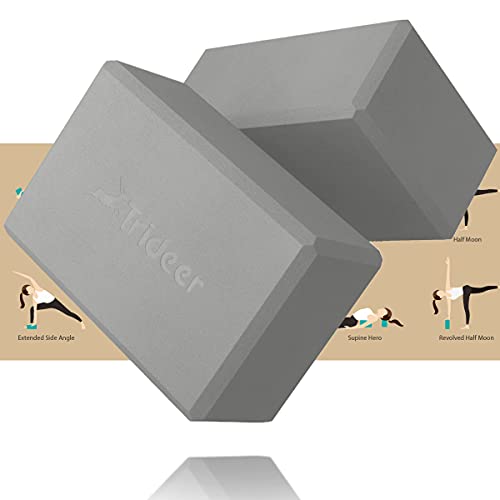
The Trideer pair is the low-profile foam option. Each block measures nine by six by three inches, a full inch thinner than the standard four-inch size, and the set is made from high-density EVA foam that the maker describes as lightweight and odor resistant. This listing is the gray version, sold under part number TR-YOGA-BLOCKS.
The three-inch height changes how the block behaves in use. It is a good fit for practitioners who find a four-inch block lifts them too far in forward folds and seated poses, and for anyone building a first prop kit who wants a pair that stores flat in a small space. Because both blocks in the pack match, you can also turn one on its side and stand the other flat to mix heights. As with the Gaiam pair, foam gives a slightly softer feel under weight than cork, which some people prefer for blocks placed under the back or head in restorative positions.
Specs
- Material: EVA foam
- Dimensions: 9 x 6 x 3 inches each
- Pack size: 2 blocks
- Color of this listing: Gray
- Part number: TR-YOGA-BLOCKS
- Maker notes: High-density foam, described as lightweight and odor resistant
How to Choose
Start with thickness, because it decides how a block feels in your most common poses. Four inches is the standard studio size and gives the tallest support position when the block stands on its narrow edge. Three inches sits lower and suits shorter practitioners, seated work, and anyone who finds the standard height pushes their wrists or shoulders into an awkward angle. The half-size Hugger Mugger, at three and a half inches, splits the difference.
Next, choose a material. Cork is denser and firmer, holds its shape under full body weight, and has a textured surface that many practitioners prefer when hands get warm. It is also heavier to carry and is sold here only as single blocks. EVA foam is lighter, slightly softer under load, and comes in matched pairs in this guide, which matters if your practice uses two blocks at once.
Finally, count your props honestly. Many standing sequences use a block under each hand, so a pair is the practical default for home practice. Singles make sense when you are replacing one block or adding a different height to a kit you already own. Whichever you choose, confirm the pack count, dimensions and color on the listing, because several of these lines sell singles, pairs and multiple sizes under near-identical titles.
Who Should Skip
Skip yoga blocks entirely if your current practice never calls for a prop and your teacher has not suggested one; a block only earns its storage space when it is used weekly. Skip the cork singles if you travel to classes on foot or by bike and carry your kit the whole way, since the foam pairs are far lighter. Skip the three-inch Trideer pair if you are tall or know you need maximum lift in standing poses, because the lower profile may not bring the floor close enough. And skip all five picks if you need a wedge, bolster or other shaped prop, since those are different products with different jobs.
FAQ
How many yoga blocks should a beginner buy?
Two is the most practical starting point, because many common setups use one block under each hand. The Gaiam and Trideer two-packs cover that in a single purchase. A single cork block still covers seated and restorative work, but you would need to order two units for two-handed standing poses.
What is the difference between cork and foam yoga blocks?
Cork blocks are denser and firmer, keep their shape under heavy load, and have a naturally textured surface. Foam blocks are lighter, feel slightly softer where they meet the body, and are usually sold in pairs. Neither material is better in general; the choice depends on how much firmness you want under your hands and how far you carry your kit.
Which block height is right, three inches or four inches?
Four inches is the standard size and offers the most lift, which helps in standing poses where the floor feels far away. Three inches suits seated poses, shorter practitioners, and anyone who finds the taller block tips their alignment too far forward. Many practitioners eventually own one of each height, but start with the size that matches the poses you do most.
How do you clean a yoga block?
Wipe the surface with a damp cloth and mild detergent, then let the block air dry fully before storing it. Gaiam’s own care guidance for its blocks recommends spot cleaning with mild detergent and towel or air drying. Avoid soaking any of these blocks, since foam and cork both absorb water, and keep them out of prolonged direct sunlight.
Final Verdict
For most home practitioners, the Gaiam foam two-pack is the straightforward starting point: standard size, a matched pair, and beveled edges that are easy on hands and wrists. Choose the Trideer pair instead if a lower three-inch profile fits your body and your poses better. If you prefer the firm, textured feel of cork and mostly use one block at a time, the Manduka is the firmest single here, the Gaiam brick is the lowest and narrowest, and the Hugger Mugger splits the difference at three and a half inches. Whichever route you take, confirm the pack count and dimensions on the listing before ordering.