Key takeaways
- Compare the best lifting straps for deadlifts, rows and shrugs, with clear notes on strap length, padding, materials and fit for newer lifters.
- Top Pick: Harbinger Padded Cotton Lifting Straps with NeoTek Cushioned Wrist
- Runner-up: DMoose Lifting Straps, 24-inch
- Also consider: Schiek Sports Power Lifting Straps (1000-PLS)
Every lifter who pulls heavy eventually hits the same wall: the back and legs still have reps left, but the bar starts slipping out of the hands. Lifting straps solve that narrow problem. They loop around your wrist and wrap around the bar, tying your grip to the weight so your forearms stop being the weakest link on deadlifts, rows and shrugs.
Straps are a training aid, nothing more. They do not protect your wrists, fix your form, or make a lift safer by themselves, and they are no substitute for building grip strength. What they do is let the muscles you are training finish the set. This guide compares five well-known pairs and explains the differences in length, padding and design.
As an Amazon Associate, we earn from qualifying purchases.
Quick answer
For most lifters, a padded cotton lasso strap is the right first pair: the Gymreapers and Harbinger straps below cover the basics well. Choose the Gymreapers for a shorter 18 inch strap that wraps fast, the Harbinger for a longer 21.5 inch tail and published width, and the DMoose if you want the longest wrap at 24 inches.
1. Gymreapers Lifting Wrist Straps
The Gymreapers straps are the pair many beginners start with. They use the classic lasso layout: a loop you thread the tail through, slide over your wrist, then wrap around the bar. The 18 inch cotton strap is on the shorter side, which means fewer wraps and a faster setup between sets. For lifters in a busy gym, that shorter tail is a genuine convenience.
The wrist section carries a neoprene pad, which spreads pressure across the back of the wrist when the strap pulls tight. Cotton webbing grips knurling well and tends to bite into the bar rather than slide. These straps suit deadlifts, barbell rows, shrugs and cable work where a secure hold matters more than maximum wrap length.
The trade-off is the shorter length. On thicker bars or for lifters with large hands, 18 inches leaves less material to work with, and you may get one solid wrap instead of two. If your pulling is mostly moderate loads on standard bars, that rarely matters. For heavy singles on a thick bar, look at the longer options below.
Specs
- Style: lasso (loop-through) lifting straps
- Material: cotton, per the listing
- Wrist padding: neoprene pad
- Strap length: 18 inches
- Sold as: one pair
- Colors and sizing options: confirm on the listing
2. Harbinger Padded Cotton Lifting Straps with NeoTek Cushioned Wrist

Harbinger has sold lifting accessories for decades, and this padded cotton pair is its staple strap. At 21.5 inches long and 1.5 inches wide, it gives you noticeably more tail than the Gymreapers above, which translates into an extra wrap around the bar and a more locked-in feel on heavy deadlifts. The published width matters too: 1.5 inches spreads the load across the hand without folding or bunching.
The wrist pad uses what Harbinger calls NeoTek cushioning: a padded section that sits against the wrist so the strap does not dig in when the weight hangs from it. The listing highlights reinforced edges and heavy-duty stitching, the two places cheap straps usually fail first, since the loop and the pad seam take the most stress.
This is a sensible pick if you have larger hands, train with thicker bars, or simply prefer more wrap. The extra length takes a few seconds longer to set up, and beginners sometimes find long tails awkward until the wrapping motion becomes automatic.
Specs
- Style: lasso (loop-through) lifting straps
- Material: cotton, per the listing
- Wrist padding: NeoTek cushioned wrist pad
- Strap length: 21.5 inches
- Strap width: 1.5 inches
- Sold as: one pair
- Color shown in the listing: black; other options, confirm on the listing
3. DMoose Lifting Straps, 24-inch

The DMoose straps are the longest in this roundup at 24 inches, with a 1.5 inch width and neoprene padding at the wrist. That extra length is the whole point: more strap means more wraps around the bar, which some lifters prefer for very heavy deadlifts, rack pulls and shrugs.
The strap itself is cotton, per the listing, and the product summary describes a grip-focused surface intended to hold against the bar. The padded wrist section cushions the point where the loaded strap presses into the wrist. DMoose sells these as a pair, and the listing dimensions are 24 by 1.5 inches.
Length cuts both ways. A 24 inch strap takes longer to wrap and leaves more loose tail to manage, which can feel clumsy on lighter work or high-rep sets where you reset often. Lifters who mostly pull moderate weights will be happier with a shorter strap; lifters whose grip gives out on top sets will appreciate the extra material.
Specs
- Style: lasso (loop-through) lifting straps
- Material: cotton, per the listing
- Wrist padding: neoprene padded support
- Strap length: 24 inches
- Strap width: 1.5 inches
- Sold as: one pair
- Color shown in the listing: black; other options, confirm on the listing
4. Fitgriff Lifting Wrist Straps
Fitgriff takes a slightly more tailored approach. The listing describes straps made of premium cotton with padding, at a professional length of 23 inches, and notes that the pair is tailored for the left and right hand, with the straps marked so you can tell them apart. That shaping helps the loop sit consistently on each wrist instead of twisting.
At 23 inches, these sit near the long end of the range, allowing two to three wraps around a barbell according to the product description. That suits lifters who like a fully wrapped, locked-in hold for deadlifts and heavy rows.
Because the pair is hand-specific, you do need to grab the correct strap for each side, which adds a moment of setup the first few times. The brand sells the straps in more than one size variant, so check the size options on the listing before ordering rather than assuming one size fits all wrists.
Specs
- Style: lasso (loop-through) lifting straps, tailored per hand
- Material: premium cotton, per the listing
- Wrist padding: padded
- Strap length: 23 inches
- Sold as: one pair (left and right)
- Size variants and colors: confirm on the listing
5. Schiek Sports Power Lifting Straps (1000-PLS)
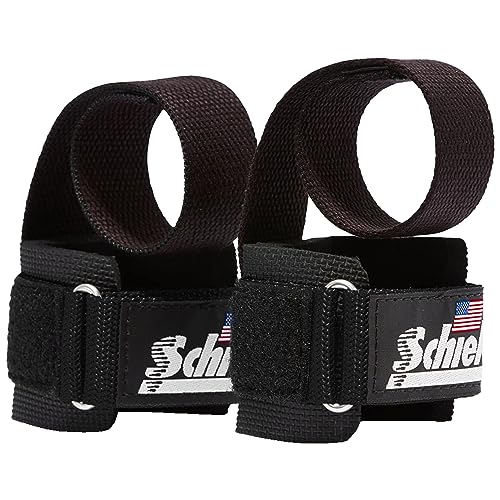
Schiek is another long-established name in lifting gear, and the 1000-PLS is its straightforward power lifting strap. The listing presents them for back and shoulder work such as lat pull-downs, shrugs, pull-ups and rows, which makes them a reasonable match for lifters whose strap use centers on machine and cable pulling as much as barbell deadlifts.
The design keeps things simple compared with the padded, extra-long options above. Schiek also sells a dowel version (the 1000-DLS), so this model is the brand’s standard strap in a family of variations. The listing gives an item weight of 0.25 pounds for the pair, so they add nothing noticeable to a gym bag.
Details such as exact strap length and padding construction are less prominent on this listing than on the others here, so confirm those points on the listing if they matter to you. What you are buying is a basic, proven strap from a specialist brand.
Specs
- Brand: Schiek Sports
- Model: 1000-PLS Power Lifting Straps
- Intended use per the listing: pull-downs, shrugs, rows and similar pulling work
- Item weight: 0.25 pounds, per the listing
- Strap length and padding details: confirm on the listing
- Sold as: one pair; unit count, confirm on the listing
How to choose
Start with strap length, because it decides how the strap feels in use. Straps around 18 inches wrap quickly and suit standard bars and moderate loads. Straps from 21 to 24 inches give extra wraps, which helps on thick bars, large hands and very heavy pulls, at the cost of slower setup. Most beginners do well in the middle of that range.
Next, consider padding. A neoprene or cushioned wrist pad does not change what the strap can hold, but it changes comfort when the load hangs from your wrists set after set. If you plan to use straps for most of your heavy pulling, padding is worth having. If straps come out only for one top set, a plain strap is fine.
Material matters less than people think at beginner loads. Cotton is the common choice in this guide: it grips the bar well and is easy to wash. Whatever you pick, inspect the stitching at the loop and pad regularly, and retire a strap that frays or tears. Finally, learn to wrap correctly: the strap should wrap around the bar in the opposite direction to your fingers, so the weight tightens the wrap instead of unrolling it. Practice with light weight first.
Who should skip
Skip straps for now if you are still learning basic deadlift and row technique with light loads. Your grip develops fastest when it does the work, and adding straps too early can mask a weak grip you would rather strengthen. Save straps for your heaviest pulling sets, and keep training grip directly with holds and carries.
Also skip straps for pressing movements, Olympic lifts and anything where you need to release the bar instantly. Straps are for pulling only. And if you have a wrist injury or ongoing wrist pain, straps are not a fix; get the wrist checked rather than loading it through a strap.
FAQ
When should a beginner start using lifting straps?
Once your grip, not your back or legs, is what ends your deadlift or row sets at working weights. A common approach is to lift without straps for warm-ups and lighter sets, then use straps only for the heaviest sets so grip keeps developing.
Do lifting straps weaken your grip over time?
They can if you use them for every pulling set, because your forearms stop being challenged. Used selectively on top sets while you train grip separately, they simply let the target muscles finish their work.
How long should my first pair of lifting straps be?
For most lifters, somewhere between 18 and 22 inches works well. Shorter straps set up faster; longer straps allow more wraps on thick bars or for larger hands. If you are unsure, a mid-length padded cotton pair is the safest starting point.
How do I care for cotton lifting straps?
Let them dry after training instead of leaving them in a closed gym bag, and wash them occasionally following the maker’s guidance. Check the loop stitching and the fabric near the wrist pad before heavy sessions, and replace the pair if you find fraying or torn stitching.
Final verdict
For a first pair, the Gymreapers straps are the easiest recommendation: padded, simple and quick to wrap. The Harbinger pair is the better choice if you want published dimensions and a longer tail. Choose the DMoose or Fitgriff if maximum wrap length is your priority, and the Schiek for a plain, proven strap for rows, pull-downs and shrugs. Whichever pair you pick, treat straps as a tool for your heaviest pulling sets, and keep training your grip without them.